

Delivered live web vehicle tracking, estimated arrival times and electronic proof of delivery.
← Back to Case Studies
Case study · Logistics & Supply Chain
Connecting Vehicle and Container Tracking to Inland Transport Operations
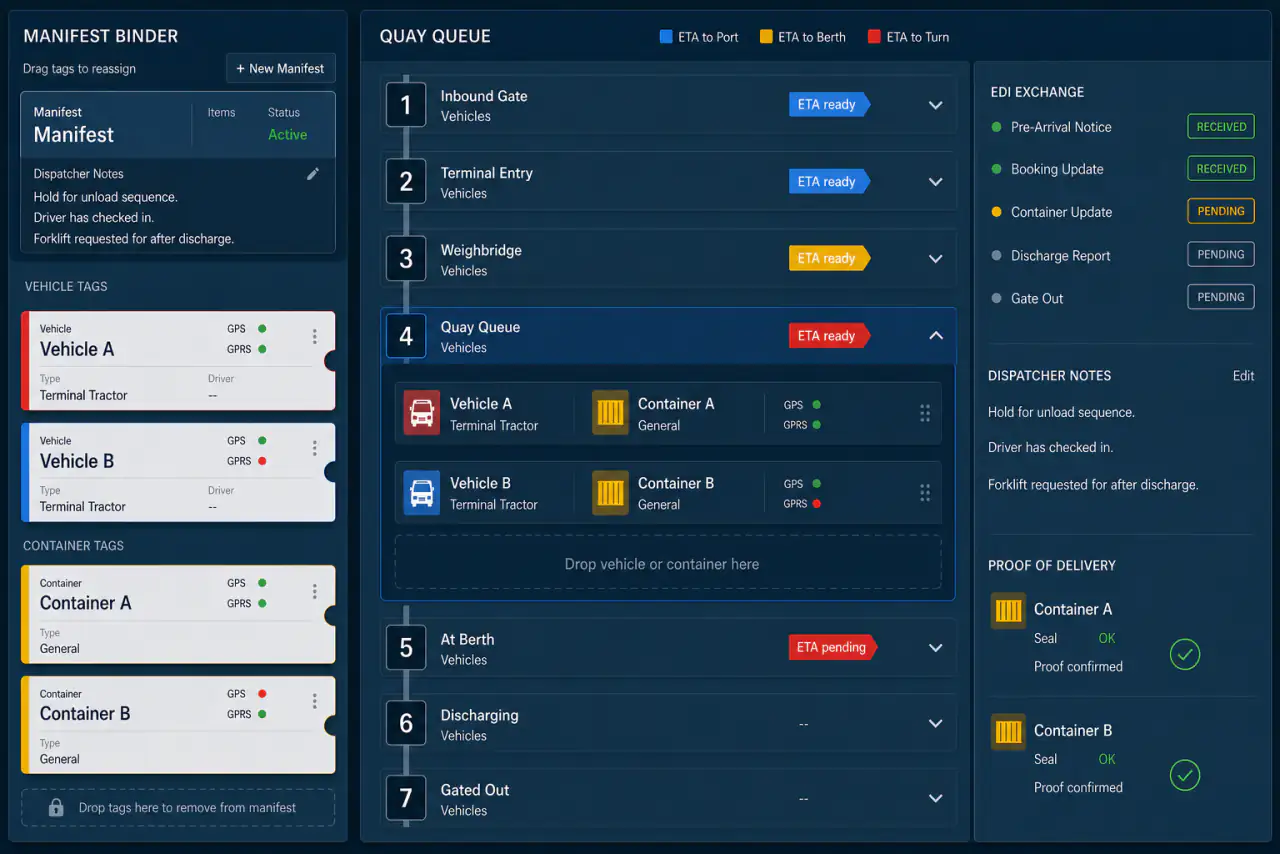
A logistics technology client needed a central control system and vehicle PDAs to help shipping lines and haulage operators manage inland transport. The project connected live tracking, estimated arrival times and electronic proof of delivery.
- Client context
- Shipping, haulage and fleet operators
- recorded project effort
- 80 person-months
- web, PDA and EDI
- 3 workstreams
- tracking and communication
- GPS/GPRS
The operating constraints
What the project needed to address
- Shipping and haulage operators needed better visibility of vehicle and container movement as UK port traffic grew.
- Vehicle PDAs needed wireless communication with the central system and its database.
- The platform needed to integrate geographic and business data using EDI while supporting client-specific interfaces.
Platform scope
Connect the control centre, vehicle devices and business interfaces
Delivered a component-based logistics platform with a central control system, Windows CE vehicle PDAs, wireless web services and EDI integration. Web Parts supported client customisation.
Delivery workstreams
Coordinate web, PDA and EDI development
Ran web, PDA and EDI development workstreams in parallel, supported by a project manager, system architect and QA team.
Used .NET Framework 2.0, Windows CE 5.0 and Oracle 10g. MapPoint displayed central tracking information, while TomTom supported PDA navigation.
Used VSTS for project management and a prototype-based development approach. Automated coding, testing and builds supported delivery.
Covered requirements analysis, architecture, implementation, testing and server deployment.
Technology and delivery context
Tools and practices recorded for this engagement
.NET Framework 2.0Windows CE 5.0Oracle 10gGPS/GPRSMapPointTomTomSharePointEDI
The result
Recorded project outcomes
Improved transport visibility and the experience of hauliers, shippers and their customers.
A component-based SOA structure supported additional integration connectors as business requirements changed.
Need support for a similar system or workflow?
Tell us about your existing platform, operating requirements and delivery priorities.
Discuss Your Project