

Business Software · Project assessment
Turning a consulting methodology into a subscription product
A consulting firm turned spreadsheet-based delivery assessments into a configurable SaaS product, connecting its methodology with project planning and portfolio decisions.
- Assessment SaaS
- Configurable rules
- Jira integration
- Methodology productization
At a glance
- Business need
- Make consulting expertise available through self-service
- Product
- Multi-tenant assessment and portfolio platform
- Delivery
- Product development and continuing releases
- Technology
- .NET, Angular, SQL Server, Azure
The business context
The consulting method was the product. The spreadsheet limited how it could be delivered.
A project sponsor needs to choose a delivery approach before committing people and budget. The answer depends on organizational readiness, project constraints, and risk. The client’s consultants already had a method for evaluating those factors, supported by linked questions, weightings, and recommendations in Excel.
That expertise was valuable beyond a consulting engagement, but distributing a spreadsheet did not create a subscription service. The firm wanted organizations to complete consistent assessments online, understand the recommended approach, and take the resulting deliverables into their own project tools. Shinetech helped turn that operating model into a web product.
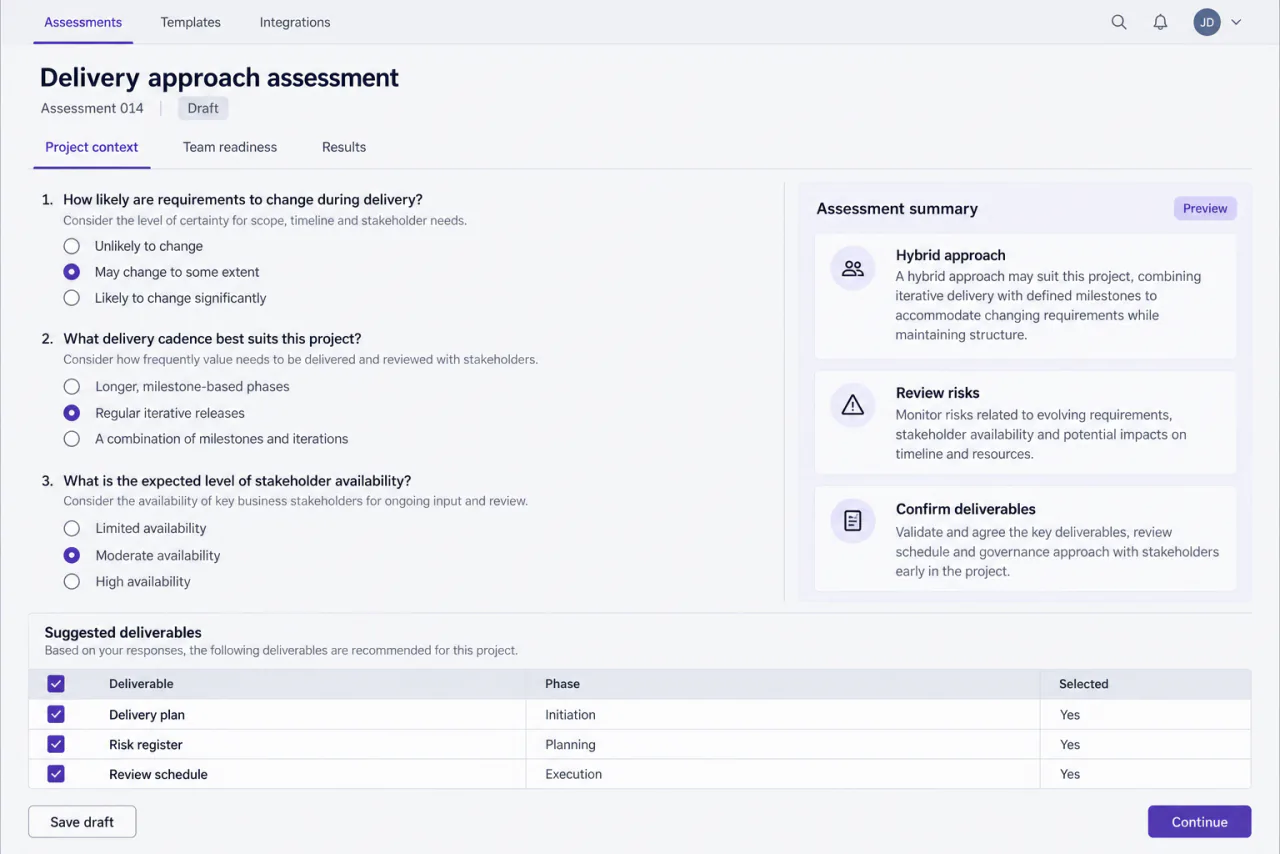
A project assessment with a visible next step
A fictional assessment illustrates how structured answers can lead to a delivery recommendation and working documents. The questions, values, and recommendation are illustrative; they do not reproduce the client’s proprietary methodology. View full-size interface (new tab)
The operating challenge
The rules had to remain editable after they left Excel.
Moving cells into web forms would have reproduced the visible questionnaire while losing the relationships behind it. Answers influenced scores, scores informed a delivery approach, and that approach changed the risks and deliverables worth considering. Those relationships also evolved as the consultancy refined its practice.
The product needed another kind of separation as well: different subscribing organizations had to work within their own data and access rights. A reusable assessment template could be shared across the service; an organization’s projects, answers, and reports could not.
The delivery decisions
Make the method configurable, then connect its output to delivery.
- 01
Model the assessment as data
Questions, scoring factors, constraints, recommendation rules, and deliverable templates became managed configuration. The client could update the supported methodology without treating every adjustment as a software release. Guided assessments brought those elements together into a repeatable user journey.
- 02
Design for subscribing organizations
The platform included organization-level data separation, role-based access, subscription levels, enterprise sign-in, and audit records. These capabilities supported the move from a consultant’s individual working file to a service used by multiple customer organizations.
- 03
Keep planning integrations outside the interactive request
Jira work ran through asynchronous Azure Functions tasks. Microsoft Project file processing used a separate Windows service because its dependencies did not fit the web application’s runtime. The assessment experience and each integration could therefore be operated and monitored separately.
How the workflow holds together
An assessment needed a useful next step.
From recommendation to working materialThe workflow continued from delivery-approach selection into risk assessment, recommended deliverables, templates, and exported reports. Users could carry that material into Jira and Microsoft Project instead of manually recreating the assessment’s output in a planning tool.
Portfolio capabilities later added another level of context: projects, sponsors, dependencies, constraints, resources, and scoring factors could be viewed together. Automated tests covered business rules across the application, service, and data layers, supporting continued changes to a product whose value depended on consistent interpretation of the methodology.
The delivered result
Consulting expertise became a service customers could use directly.
Self-service assessment
Customers could complete a consistent online process instead of relying on a consultant to operate an Excel workbook.
A maintainable methodology
Managed questions, rules, and templates gave the firm a practical way to evolve its approach.
A wider product
Reporting, planning integrations, and portfolio capabilities extended the original assessment workflow.
The platform entered production and continues to be used and developed. Its commercial role is to make the client’s own methodology available through a subscription product.
Case taxonomy
Searchable by industry, technology, product, and business need.
Industry and product
- Business Software
- Consulting software
- Assessment SaaS
Technology and delivery
- .NET
- Angular
- Azure
- Multi-tenant architecture
- Jira integration
- Microsoft Project integration
Business need
- Configurable rules
- Methodology productization
- Risk assessment
- Portfolio management