← Back to Case Studies

Case study · Business Software

Streamlining Supplier and Invoice Administration in One Web Tool

A software-services organization needed a complete administration tool that helped finance staff manage suppliers, track invoices, apply tax categories, and produce usable reports and exports.

Supplier ManagementInvoice ManagementJavaMySQL
Streamlining Supplier and Invoice Administration in One Web Tool
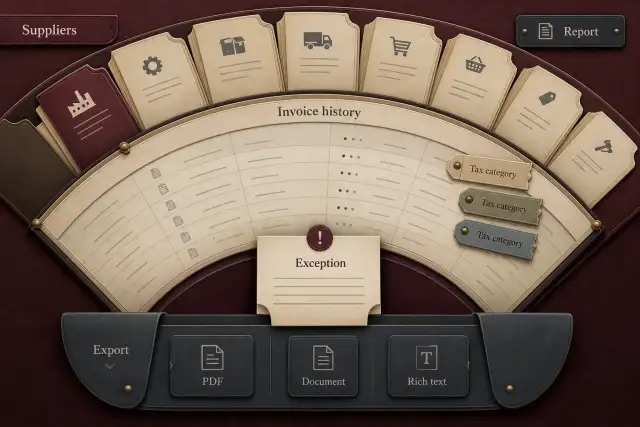
AI-generated or illustrative concept based on the case requirements. Actual client system not shown.
Industry
Business Software
Delivery
Dedicated team
Focus
Business outcomes

The situation

Finance staff needed a reliable way to follow supplier and invoice activity from entry through reporting.

The planned system had to cover raw-material suppliers, users, invoice creation and changes, tax categories, reporting, printing, and data exchange with other tools.

  • Because invoice activity could be updated or removed, the product also needed a dependable history of those actions rather than only the latest record.

Recognise this situation?

Keep detailed financial administration usable while preserving history and export flexibility.

Connected records

Supplier, user, tax, invoice, and report data had to remain consistent across workflows.

Traceable changes

Invoice creation, updates, and deletion needed an accessible history for review.

Reusable output

Reports had to print cleanly and export to formats other systems could use.

The project approach

A layered Java application joined daily administration to reporting, history, and document output.

The team developed the product from scratch and separated presentation, business logic, object access, data access, and persistence responsibilities.

Connect suppliers, users, invoices, tax categories, and reporting around clear records and permissions.

How the solution was structured

Design the complete lifecycle before optimizing individual screens.

  1. The team translated finance-staff responsibilities into user roles, supplier records, invoice actions, tax controls, and reports.
  2. Layered Java components kept page behavior separate from business and data-access logic.
  3. Application and runtime exception handling were included so operational failures could be captured consistently rather than surface as silent data problems.

Key information

Technology and delivery context

Industry
Business Software
Services
Custom Development · Dedicated Teams
Technologies and practices
Java · MySQL · Invoices · Reporting
Business impact
Operational clarity · Delivery continuity · Usable software

The result

Finance staff gained one maintainable tool for supplier, invoice, tax, and reporting work.

  1. Simpler routine work: Staff could complete related financial administration without moving among disconnected tools.
  2. Better reviewability: Invoice history made changes easier to inspect after the fact.
  3. Maintainable structure: The n-tier design gave future enhancements clear technical boundaries.

Need to replace fragmented supplier and invoice handling with one dependable workflow?

Tell us what you are trying to achieve and we will help you find a practical way forward.

Discuss Your Situation