Who would retain knowledge between separate projects?
A lead developer continued full-time under an ODC engagement and retained responsibility for understanding the client’s projects.


Case study · Self-Storage
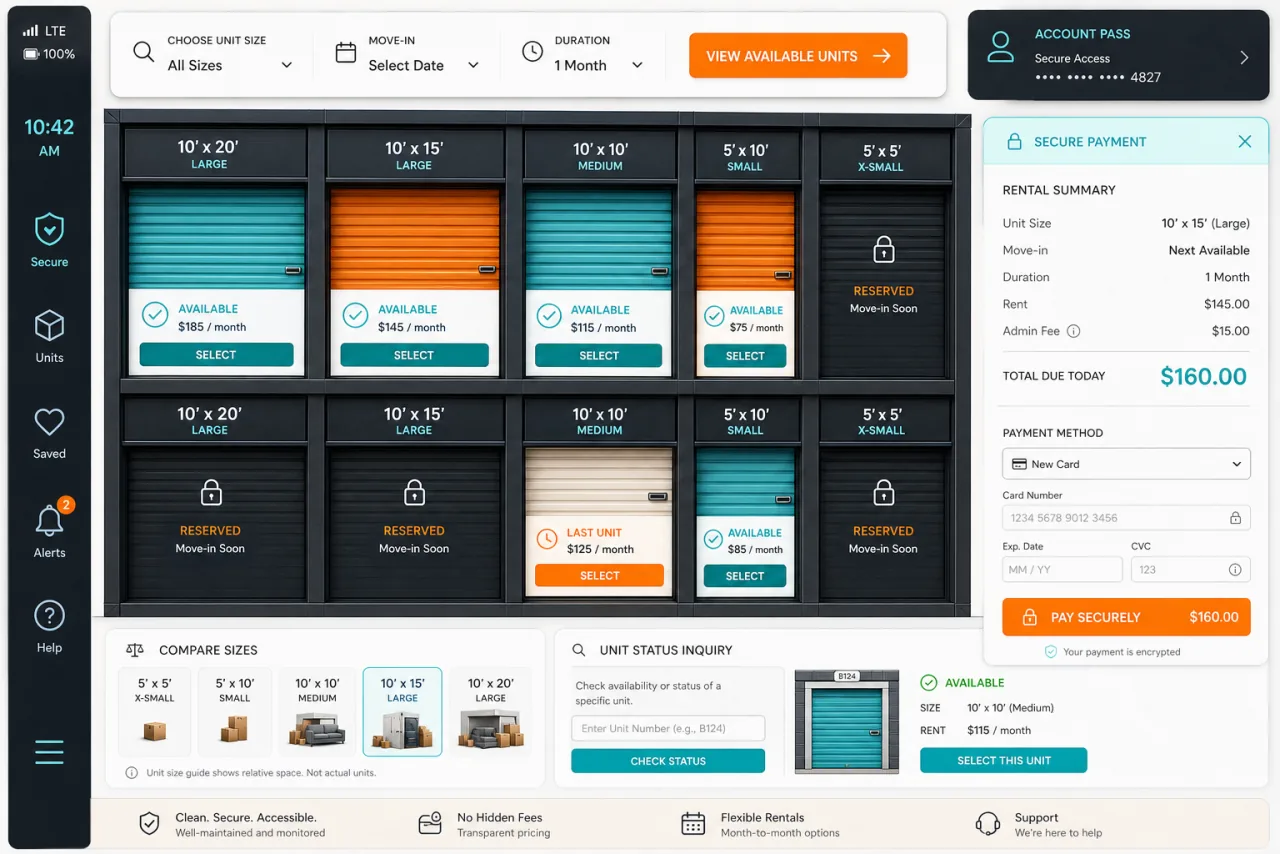
A US self-storage operator needed customer-centre systems for PC and mobile users. Shinetech combined a continuing lead-developer role with fixed-price project teams to preserve knowledge as workloads changed.
The situation
The client needed a self-storage customer centre to support business development and internal management. The original case describes a Nasdaq-listed operator based in New York, with 1,632 locations across 36 states at the time of that report. These figures are historical, not current operating statistics.
Workload varied between projects. Keeping a large dedicated team at all times was difficult, but rebuilding a team for every assignment risked losing business knowledge and producing less reliable estimates.
The project questions
A lead developer continued full-time under an ODC engagement and retained responsibility for understanding the client’s projects.
The lead assessed requirements and estimates, selected suitable resources, trained the team and coordinated its progress.
The continuing lead remained available for bug fixes and knowledge transfer when new requirements arose.
The solution
The customer-centre systems supported PC and mobile access. Delivered functions included unit booking, rentals, multiple payment methods, account management and enquiries about unit status.
The source identifies Microsoft Azure, ASP.NET/MVC, WPF, Kendo UI/Telerik, JavaScript/jQuery and SQL Server within the technical context.
The operating model separated continuing technical ownership from additional project capacity. A lead developer remained available on a monthly ODC basis; additional resources worked on fixed-price projects and dispersed when each assignment was complete.
How the work unfolded
An initial eight-developer team used Agile methods and worked with the client’s IT department and project manager. Short daily meetings covered status, questions, schedules and arrangements.
The lead handled assigned ODC work and maintained knowledge of the business requirements. When a separate project arose, one to two hours a day of ODC time could be used for its coordination.
The lead researched requirements, estimated work, selected suitable team members, provided training and knowledge transfer, assigned tasks and tracked progress and quality. Other resources worked on a fixed-price basis.
When the project team dispersed, the continuing lead remained available for bug fixing and for transferring knowledge to future resources.
Technology and delivery context
The result
The team developed customer-centre systems covering bookings, rentals, payments, accounts and unit-status enquiries.
The engagement preserved a continuing lead-developer role between separate fixed-price projects.
Additional project teams could be assembled around existing knowledge rather than starting without a familiar lead.
Tell us about your existing system, business workflows and delivery requirements.
Discuss Your Project