

Media & Entertainment
A Mobile Game Combining Casual Play and Music Rewards
A four-month Java mobile-game project covered game design, original artwork, implementation, testing and porting across handset types.
- Client
- US entertainment project
- Developers
- 3
- Development
- 4 months
- Porting requirement
- Nearly 80 handset types
Client & game concept
A mobile music game built around a simple interaction
The US client wanted a Java-based mobile music game in which a player controlled a large fish eating smaller fish. Eating a smaller fish rewarded the player with a distinctive piece of music.
Shinetech's responsibility was to provide a complete game solution to the client's requirements and port it to dozens of device types. The engagement involved three developers over four months.
Product requirements
Original content and broad handset compatibility
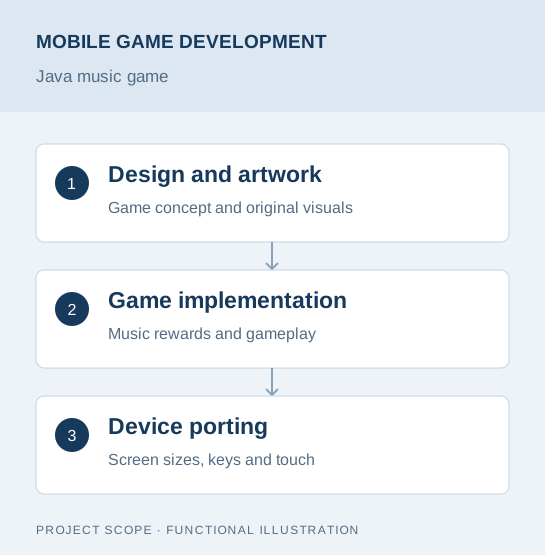
The scope included game design, detailed development documents, original game pictures, promotional posters and a demonstration version.
The game needed English, French, German, Italian and Spanish. Required screen sizes included 352 × 416, 240 × 320, 176 × 220, 208 × 208, 128 × 160 and 128 × 128.
The porting requirement covered nearly 80 handset types, including Nokia, Samsung, Motorola, I-Mate, LG and Siemens, with multiple keyboard types and touchscreens.
The client also required installation packages, downloadable internal and test versions, and final handset versions delivered against milestones.
Design & implementation
A master version followed by device integration
Game designers first defined the game. Art designers then created the pictures from those descriptions and produced the artwork for a master version.
One programmer implemented the main game logic, including event handling, the game loop and drawing logic. Another worked on functional components such as menus, data storage and game operations. Device integration followed confirmation of the master version.
The team used a professional mobile-game development toolkit with image-resource handling, a map editor, porting tools and a simulator. This reduced development time and cost.
The documented environment included JDK 1.5, IntelliJ IDEA, Eclipse, Photoshop and mobile development tools.
Testing & delivery
Simulator, team and client testing
Game functionality was checked through simulator testing, Shinetech team testing and client-team testing. Google Sheets and Bugzilla supported the testing process.
The delivery combined original game content, a confirmed master version and handset-specific integration, with final versions supplied against the client's milestones.