← Back to Manufacturing Case Studies

Case study · Metal Recycling / Manufacturing

Modernising a 20-Year-Old Recycling System That Could No Longer Support Growth

The business still ran on a VB6 management system built about 20 years earlier. As data grew, the platform slowed, crashed more often, and could not connect to the ERP, CRM and hardware the operation now needed.

Legacy ModernisationSaaS MigrationERP / CRM IntegrationPhased Cutover
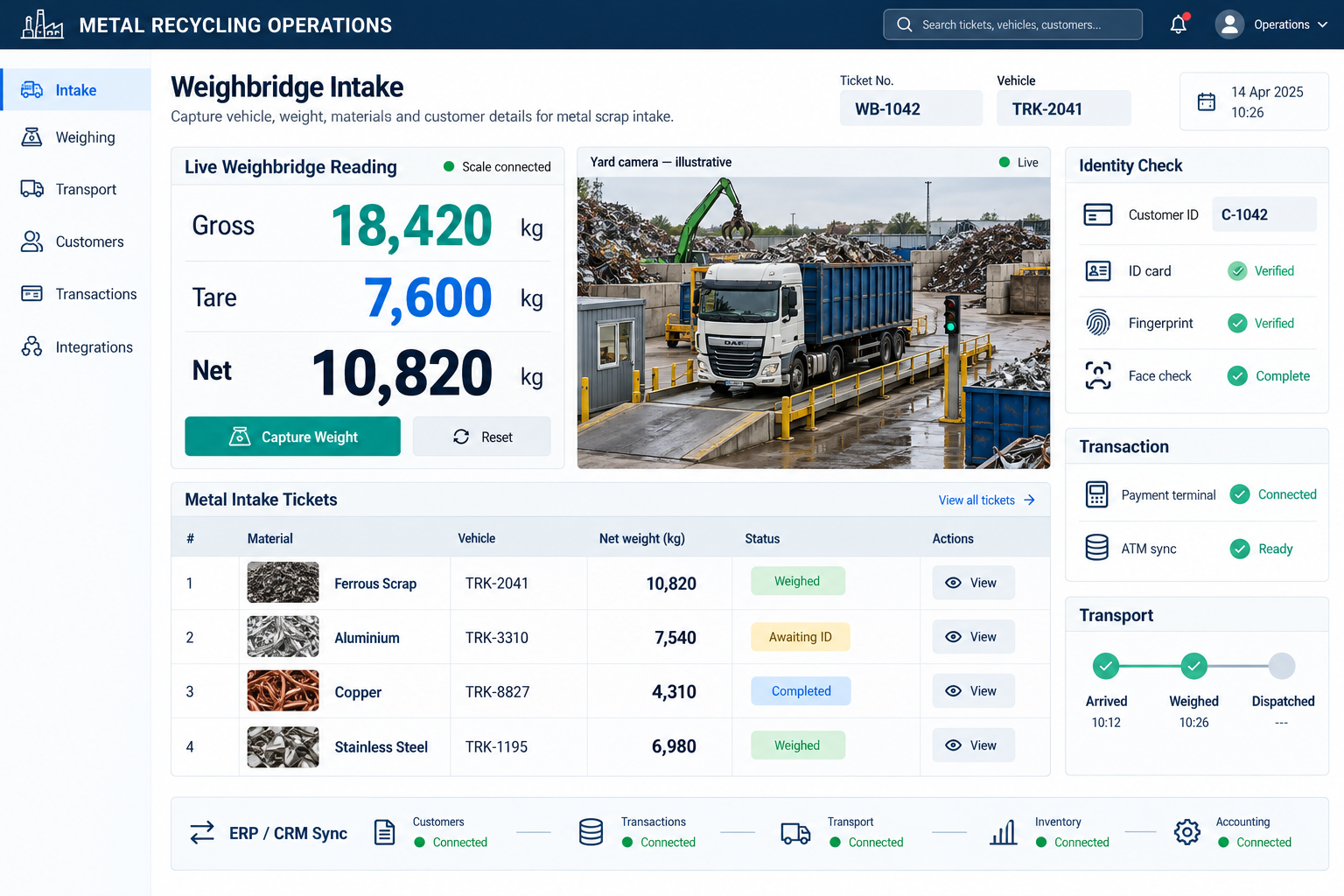
Illustrative metal recycling operations dashboard showing weighbridge intake, tickets, identity checks and ERP CRM sync
AI-generated concept interface with illustrative data. Actual client system not shown.
Legacy system age
~20 years
Response time
10s+ → ~1s
Delivery progress
80% complete

The situation

Operations still depended on a system that could no longer keep up

A metal recycling business relied primarily on a management system developed about 20 years ago with VB6 and ODBC. The system still carried day-to-day work, but business growth and technology change had turned it into a constraint.

  • Performance slowed and crashes became more frequent as two decades of data accumulated.
  • The outdated stack made it difficult to add features, find maintenance staff, or integrate third-party systems and on-site hardware such as ATMs.
  • Competitive pressure required digital transformation, including a path from the desktop system toward a SaaS platform — without stopping live operations.

Recognise this situation?

Key Questions

Can we modernise without stopping daily operations?

Modules were prioritised by business importance and replaced incrementally, with continuous integration so the old and new environments stayed synchronised.


Why is the system getting slower as the business grows?

Data structures and architecture were rebuilt so response times moved from more than ten seconds to about one second, while the platform became easier to extend.

Can a legacy system connect to ERP, CRM and hardware?

APIs connected the platform with QuickBooks, Microsoft Dynamics Business Central, NetSuite, Salesforce and SugarCRM, plus on-site devices used in weighing and identification.

The project approach

Replace the system in phases, keep the business running

The client needed an upgrade path that also turned the desktop system into a SaaS platform. Rather than a single cutover, Shinetech used an agile approach: prioritise modules, replace them iteratively, and adjust from user feedback so old and new systems remained compatible during the transition.

The modernised platform uses React, ASP.NET Core, AWS, Redis and a microservices architecture, with later capabilities spanning client relationship management, transportation, transactions, finance, reporting and hardware integration.

How the solution was structured

From a brittle desktop system to a connectable SaaS platform

  1. Restructured the architecture and frontend with microservices and React so the platform could scale, stay stable and support future expansion.
  2. Optimised data structures and supporting technologies to cut response time from more than ten seconds to about one second.
  3. Digitised core recycling workflows — transport tracking, ATM data exchange, automatic metal weighing, and user identification through facial recognition, fingerprints and identity cards.
  4. Integrated third-party ERP platforms (QuickBooks, Dynamics Business Central, NetSuite) and CRM systems (Salesforce, SugarCRM) through APIs, alongside on-site hardware.

Key information

Technology and delivery context

Industry
Metal recycling / manufacturing operations
Starting point
VB6 + ODBC desktop management system, ~20 years in use
Services
Legacy modernisation · Custom development · System integration
Technologies
React · ASP.NET Core · AWS · Redis · Microservices
Integrations
QuickBooks · Dynamics Business Central · NetSuite · Salesforce · SugarCRM · ATM and weighing hardware
Team
8 developers (including testers), 1 engagement manager, 1 architect

The result

What changed for the client

  1. Core processes such as weighing, identity recognition and transactions moved from manual handling toward automated digital workflows.
  2. Over two years of collaboration, the desktop system transitioned toward a SaaS platform; about 80% of the planned scope was complete, with the remaining work expected within a year.
  3. The business gained a faster, more maintainable platform that can connect to ERP, CRM and hardware as operations continue to expand.

Is your operations system slowing the business down?

Tell us how old the system is, which workflows still depend on it, and which ERP, CRM or hardware connections you need to keep as you modernise.

Discuss Your Situation