← Back to Case Studies

Case study · Business Software

Migrating Membership Administration across Operating Systems and Databases

A membership product built around one server and database environment needed to support multiple operating systems and database engines without duplicating its business behavior.

Business SoftwareMembership ManagementPHPDatabase Migration
Migrating Membership Administration across Operating Systems and Databases
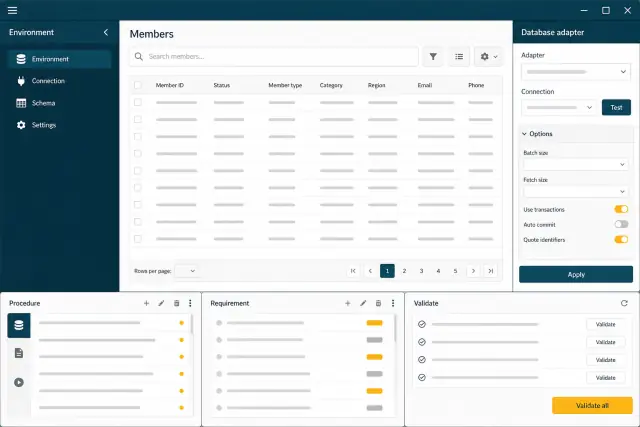
AI-generated or illustrative concept based on the case requirements. Actual client system not shown.
Industry
Business Software
Delivery
Dedicated team
Focus
Business outcomes

The situation

Infrastructure choices were embedded too deeply in the membership product.

The existing application was tied to a Windows and SQL Server environment.

  • Supporting Windows and Unix plus Oracle and SQL Server required more than copying database scripts: presentation, application logic, data access, and stored procedures needed clear separation.

Recognise this situation?

Preserve membership behavior while replacing environment-specific assumptions.

Operating-system support

The product needed to work in both Windows and Unix environments.

Database portability

Oracle and SQL Server required distinct adapters and stored-procedure handling.

Controlled change

Migration decisions needed clear requirements and disciplined scope management.

The project approach

A layered PHP design separated the membership experience from environment-specific data behavior.

Smarty presentation, application logic, and ADODB-based data access created defined boundaries for the migration.

Organize presentation, application, and database responsibilities independently.

How the work unfolded

Move one boundary at a time and validate the shared product behavior.

  1. The team first clarified which functions belonged in presentation, application, and data layers.
  2. ADODB and database-specific stored-procedure work addressed the differences between Oracle and SQL Server.
  3. Agile delivery and change controls kept migration work aligned with the documented membership requirements.

Key information

Technology and delivery context

Industry
Business Software
Services
Custom Development · Dedicated Teams
Technologies and practices
PHP · Database migration · Oracle · SQL Server
Business impact
Operational clarity · Delivery continuity · Usable software

The result

The membership product was reworked to support multiple operating systems and database engines through a layered architecture.

  1. Clearer boundaries: Presentation, application, and data responsibilities were separated.
  2. Database adapters: The product could route data access to supported database engines.
  3. Requirements control: Agile delivery and change management governed the migration scope.

Need to move a mature application across platforms or database engines?

Separate product behavior from infrastructure constraints

Discuss Your Situation