← Back to Manufacturing Case Studies

Case study · Manufacturing

Managing Supplier and Fabric Catalogs through Modular Web Components

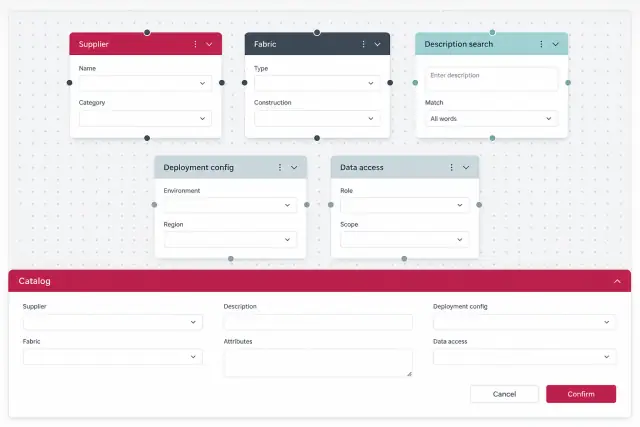
A distributor-facing system needed to maintain supplier and fabric records, expose useful product details, and support description search through reusable components.

ManufacturingFabric Catalog.NETSupplier Management
Managing Supplier and Fabric Catalogs through Modular Web Components
AI-generated or illustrative concept based on the case requirements. Actual client system not shown.
Industry
Manufacturing
Delivery
Dedicated team
Focus
Business outcomes

The situation

Supplier and fabric information needed a consistent operating model—not another isolated product list.

Users needed to create, update, delete, review, and search supplier and fabric records.

  • The application also needed reusable components and configuration that could move between deployment environments without being embedded in each module.

Recognise this situation?

Make catalog functions reusable without hiding their dependencies.

Catalog maintenance

Users needed complete create, update, delete, detail, and search workflows.

Component coordination

Reusable web parts had to communicate without becoming tightly coupled.

Deployment differences

Environment-specific values needed to remain outside the application components.

The project approach

A three-tier .NET application organized supplier, catalog, search, and configuration functions as modular components.

Communicating web parts presented distinct capabilities while sharing a layered data foundation.

Support supplier and fabric create, update, delete, and detail workflows.

How the solution was structured

Give each module a focused responsibility and a defined connection point.

  1. Supplier and fabric components handled their own product responsibilities.
  2. Description search connected users to the catalog without requiring them to know record identifiers.
  3. Presentation, application, and data concerns were separated, while deployment configuration remained external to the modules.

Key information

Technology and delivery context

Industry
Manufacturing
Services
Custom Development · Dedicated Teams
Technologies and practices
.NET · Supplier management · Product catalog · Search
Business impact
Operational clarity · Delivery continuity · Usable software

The result

The product gained a modular interface for supplier records, fabric details, search, and deployment configuration.

  1. Focused components: Supplier, fabric, search, and data functions were separated into distinct responsibilities.
  2. Useful discovery: Description search provided a direct route into product information.
  3. Layered structure: Presentation, application, and data access remained organized across three tiers.

Need a modular catalog for suppliers, products, search, and configuration?

Make product data easier to maintain and find

Discuss Your Situation