← Back to Case Studies

Case study · Business Software

Making Structured Product-Information Updates Safer for Nontechnical Users

A product-development organization needed to stop retyping emailed spreadsheets and documents into its enterprise database while preserving a familiar document-based way of working.

Product InformationXMLXPathJavaScriptValidation
Making Structured Product-Information Updates Safer for Nontechnical Users
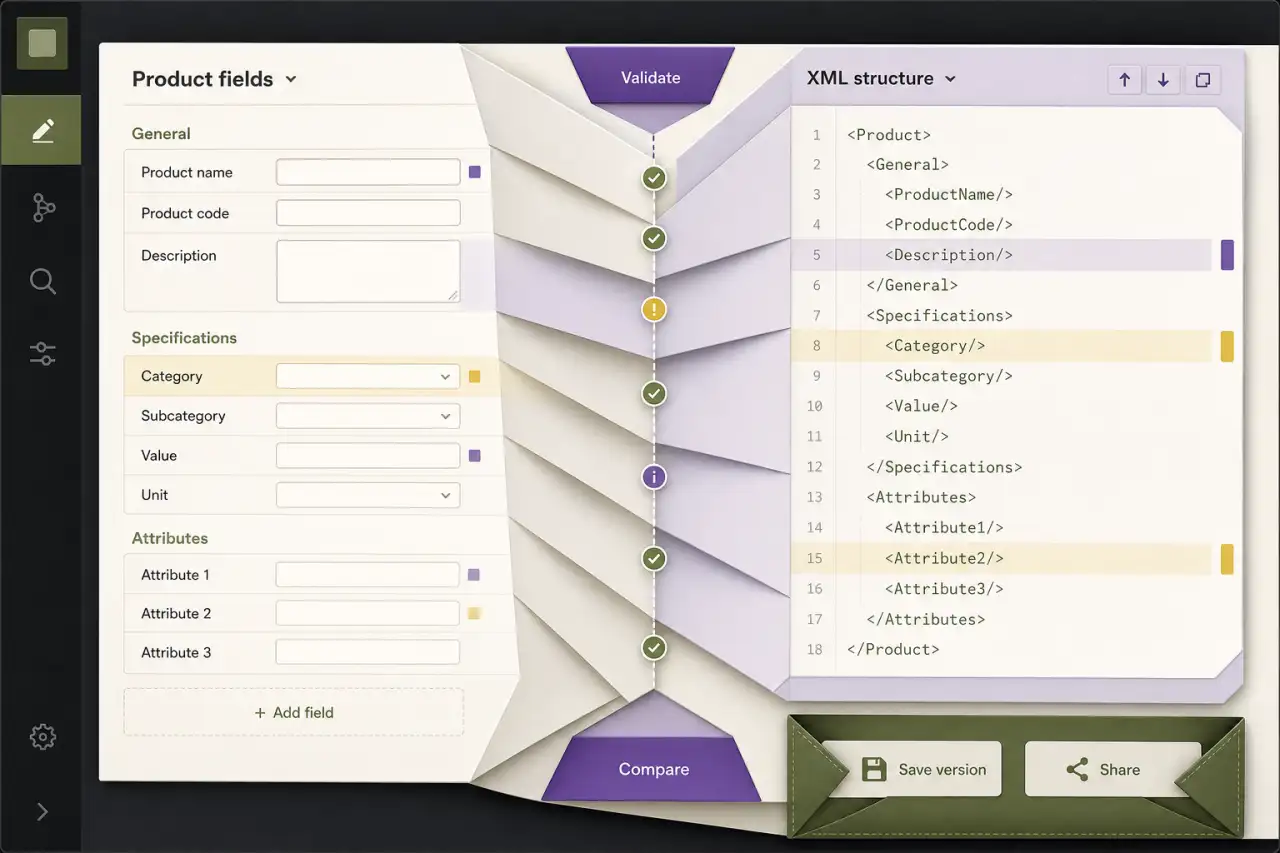
AI-generated or illustrative concept based on the case requirements. Actual client system not shown.
Industry
Business Software
Delivery
Dedicated team
Focus
Business outcomes

The situation

Product descriptions moved through familiar office files, but every database update required error-prone retyping.

End users created and updated product information by emailing spreadsheets and word-processing documents. When the data was ready for the enterprise system, IT staff had to re-enter it into the database.

  • The client wanted to keep descriptions portable enough to email, save, compare, version, and share while constraining user choices so the structured result remained valid.

Recognise this situation?

Hide XML complexity without losing the structure that made updates dependable.

Unstable property sets

Property names and ordering were not final, so a rigid form would be difficult to maintain.

Structured validation

Users needed constrained choices and a simple interface rather than direct XML editing.

Portable product documents

Descriptions had to remain independent enough to email, compare, version, and schedule before database import.

The project approach

A guided editor turned enterprise object descriptions into valid, portable XML documents.

The client interface could open, create, edit, and save structured descriptions without asking end users to work directly with markup.

Define enterprise entity behavior in reusable JavaScript interfaces and implement it in focused entity classes.

How the work unfolded

Design for changing structures rather than hard-code the first property set.

  1. The team first studied the cross-platform component environment supporting the user interface.
  2. Object-oriented JavaScript kept enterprise entity contracts separate from individual implementations.
  3. XPath literals were extracted into reusable constants so property matching could evolve without scattering fragile assumptions throughout the interface.

Key information

Technology and delivery context

Industry
Business Software
Services
Custom Development · Dedicated Teams
Technologies and practices
XML · XPath · JavaScript · Validation
Business impact
Operational clarity · Delivery continuity · Usable software

The result

Product information became easier to prepare, validate, compare, and reuse without direct database work.

  1. Safer user input: Constrained fields reduced the need for nontechnical staff to understand XML structure.
  2. More flexible maintenance: XPath-based matching accommodated changes in property names and order.
  3. Decoupled scheduling: Descriptions could move through review and version control before the enterprise database was updated.

Need a safer way for business users to prepare complex product information?

Tell us what you are trying to achieve and we will help you find a practical way forward.

Discuss Your Situation