← Back to Finance & Insurance Case Studies

Case study · Financial Services

Maintaining and Extending a Complex Enterprise Payment Platform

A mature electronic-payment product needed ongoing feature work and defect resolution without transferring business analysis or core security ownership away from the client.

Financial ServicesElectronic PaymentsJavaProduct Maintenance
Maintaining and Extending a Complex Enterprise Payment Platform
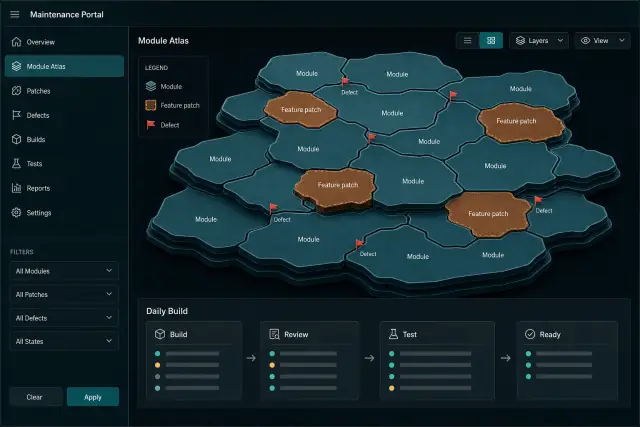
AI-generated or illustrative concept based on the case requirements. Actual client system not shown.
Industry
Financial Services
Delivery
Dedicated team
Focus
Business outcomes

The situation

A mature payment platform had to keep changing without blurring ownership of critical decisions.

The product contained a complex modular Java architecture and an established body of business behavior.

  • The client needed reliable capacity for maintenance, new functions, new modules, and defect resolution while retaining control of business analysis and core security work.

Recognise this situation?

Contribute safely inside a complex product while preserving client decision boundaries.

Complex modules

Features and defects crossed multiple Java components and integration points.

Continuous product work

Maintenance, new functions, and new modules all competed for delivery attention.

Shared ownership

Engineering contribution had to respect client ownership of analysis and core security.

The project approach

An extension team worked within the platform's Java architecture and the client's ownership model.

Daily coordination connected scoped engineering work with the product's review, build, and test practices.

Trace affected Struts, Spring, Hibernate, EJB, and build components before changing behavior.

How the work unfolded

Treat maintenance as ongoing product engineering—not an isolated queue of tickets.

  1. The team learned the modular product architecture and the dependencies surrounding each requested change.
  2. Feature work and defect resolution moved through shared review and testing rather than bypassing the established product process.
  3. Daily coordination kept scope and ownership visible between the extension team and client specialists.

Key information

Technology and delivery context

Industry
Financial Services
Services
Custom Development · Dedicated Teams
Technologies and practices
Java · Product maintenance · Defect resolution · Distributed delivery
Business impact
Operational clarity · Delivery continuity · Usable software

The result

The payment product gained ongoing engineering capacity for maintenance, new modules, features, and defect resolution.

  1. Product context preserved: Changes were made with awareness of the platform's modular architecture.
  2. Broader delivery scope: The team handled both defect resolution and approved new development.
  3. Clear boundaries: Critical business and security responsibilities remained with client specialists.

Need an engineering team that can maintain and extend a complex platform?

Add capacity without losing product context

Discuss Your Situation