← Back to Human Resources Case Studies

Case study · Human Resources

Launching Multi-Tenant HR Administration as a SaaS Product

An HR software provider needed to turn a broad set of employee-administration functions into a multi-tenant online service that its own team could operate.

Human ResourcesHRISSaaSASP.NET MVC
Launching Multi-Tenant HR Administration as a SaaS Product
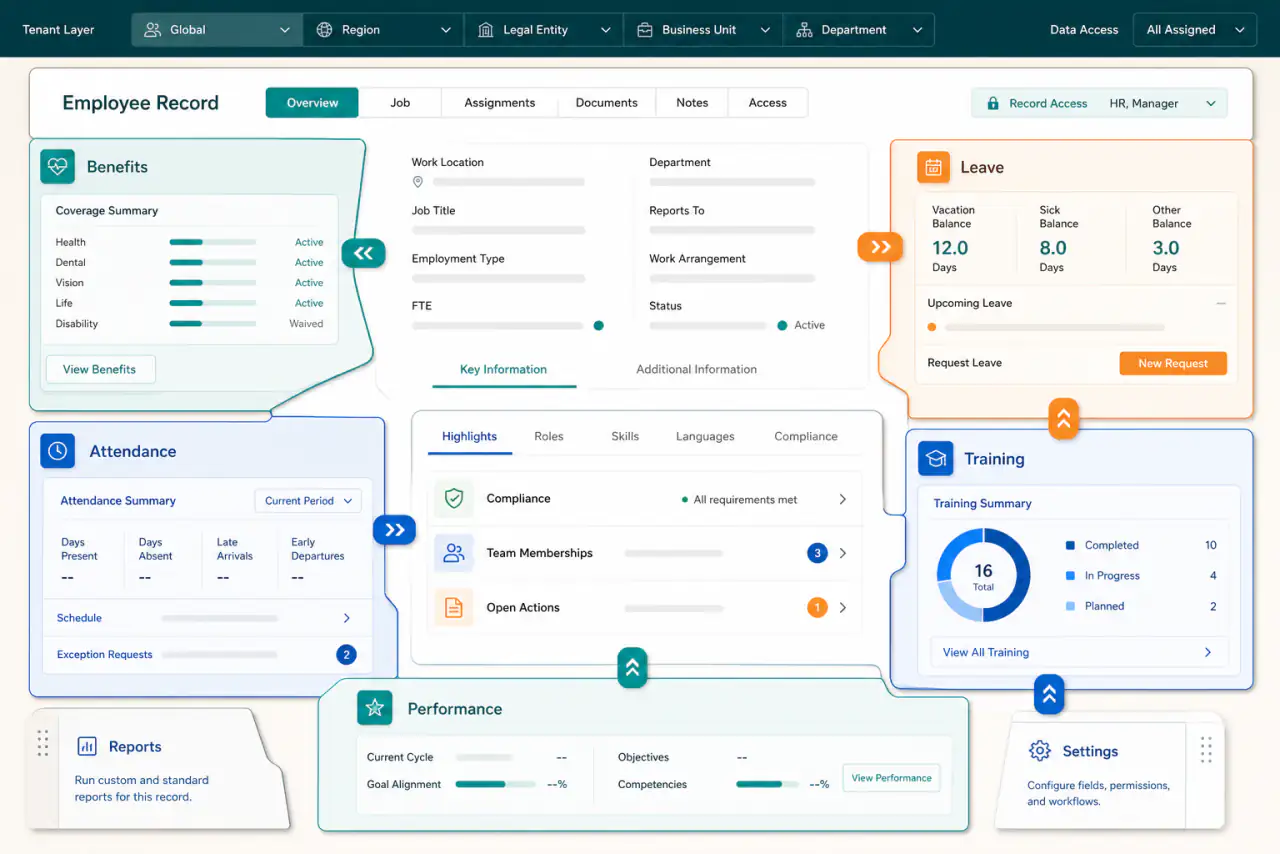
AI-generated or illustrative concept based on the case requirements. Actual client system not shown.
Industry
Human Resources
Delivery
Dedicated team
Focus
Business outcomes

The situation

The product had to support day-to-day HR administration while serving more than one customer organization.

Core employee information was only one part of the service. Benefits, leave, attendance, training, performance, reporting, settings, and dashboards also needed a consistent product model.

  • The provider intended to offer the product as an online subscription service, which made tenant separation, permissions, configuration, and operational handoff part of the delivery problem.

Recognise this situation?

Build a broad HRIS without turning each module into a separate product.

Multi-tenant context

Data and configuration needed to remain scoped to the correct customer organization.

Wide functional surface

Benefits, leave, attendance, training, and performance each introduced different workflows.

Operational ownership

The provider's team needed working software, visibility into progress, and a usable handoff.

The project approach

A multi-tenant ASP.NET MVC product connected HR modules around a shared employee record.

Agile delivery kept priorities visible while Entity Framework and SQL Server supported the product's structured information.

Define tenant scope, employee records, module boundaries, permissions, reports, and settings.

How the work unfolded

Make product decisions visible through frequent working increments.

  1. The client-side business role and delivery leadership maintained priorities and estimates as the product evolved.
  2. Daily communication and regular demonstrations gave stakeholders a concrete view of employee, benefit, leave, attendance, training, and performance functions.
  3. Continuous integration kept changes moving through a shared engineering path, and final knowledge transfer prepared the provider's operating team to take ownership.

Key information

Technology and delivery context

Industry
Human Resources
Services
Custom Development · Dedicated Teams
Technologies and practices
HRIS · SaaS · ASP.NET MVC · SQL Server
Business impact
Operational clarity · Delivery continuity · Usable software

The result

The provider gained a multi-tenant HR administration product it could operate as an online service.

  1. Employee context connected: Benefits, leave, attendance, training, and performance could relate to the same administrative record.
  2. Delivery stayed visible: Priorities, estimates, increments, and demonstrations gave stakeholders regular product feedback.
  3. Ownership was transferred: Knowledge transfer supported the provider's ability to operate the delivered SaaS product.

Need to build or extend a multi-tenant HR software product?

Tell us what you are trying to achieve and we will help you find a practical way forward.

Discuss Your Situation