Which warehouse activities needed to become digital?
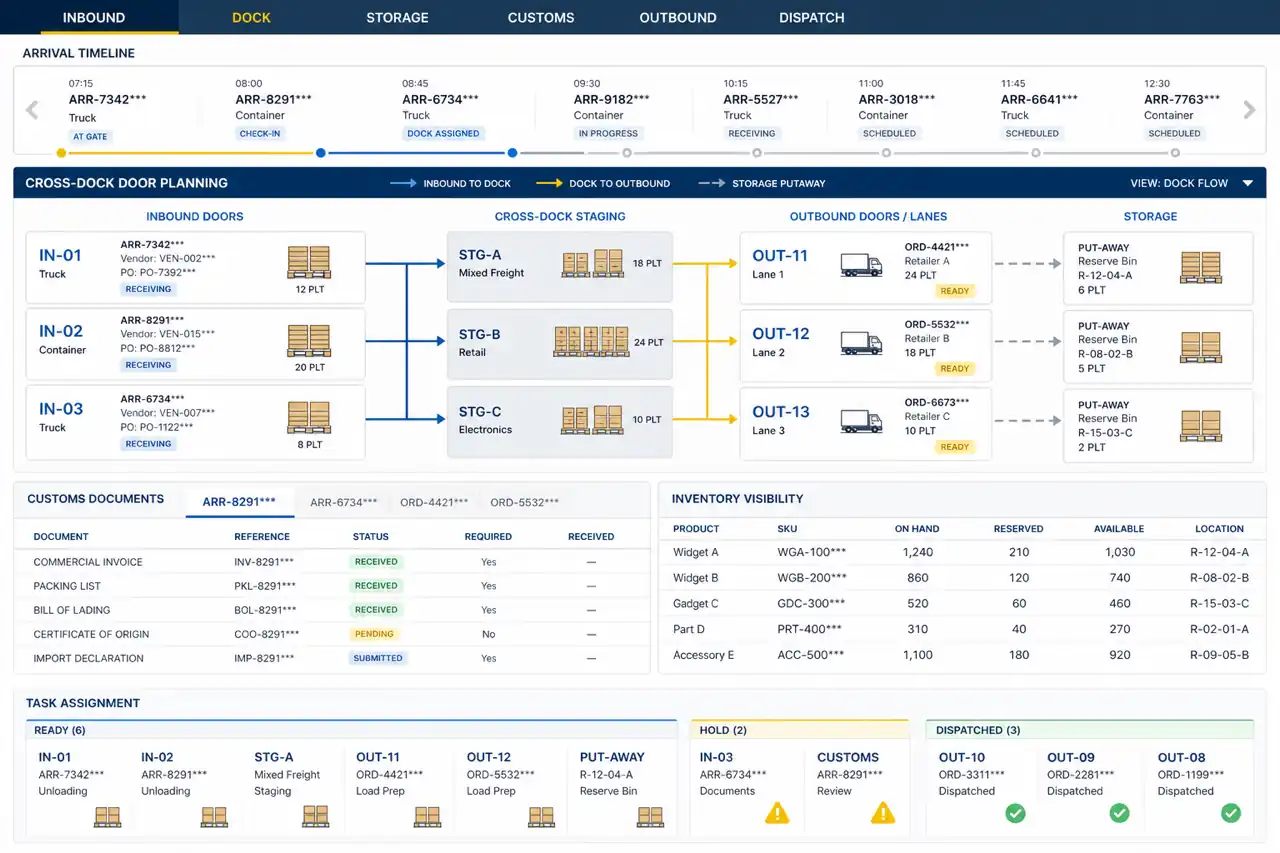
The agreed functions covered receiving, dispatch, inventory, task assignment, alerts and handheld data entry.


Case study · Freight & Logistics
A Norway-based freight forwarder relied on Excel and printed documents for warehouse work. Shinetech built an online logistics system connecting warehouse processes, transport coordination and goods tracking.
The situation
The client provided domestic and international freight forwarding, warehouse rental, dangerous-goods transport and customs clearance. Increasingly complex logistics operations were difficult to manage with the existing tools.
The transport management system left warehouse processes dependent on Excel and printed documents. The client wanted warehouse planning, transport management and product delivery coordinated through a common platform.
The project questions
The agreed functions covered receiving, dispatch, inventory, task assignment, alerts and handheld data entry.
The requirement included a common platform, shared data between warehouses and central personnel management.
The project addressed goods tracking and integration of warehouse processes with other logistics activities.
The solution
The team and client identified the main requirements before development: digital receiving and dispatch, task allocation, information reminders, business alerts, Track & Trace, warehouse-rental statistics, billing and handheld entry.
The online system covered inbound and outbound processes, facilities and storage, physical inventory, cross-docking, workload balancing and labour management.
Further functions included third-party logistics integration, packing and shipping options, master bills of lading and workflows such as wave handling, resource management, work orders and labelling.
How the work unfolded
Discussions began in June 2011. A demonstration in August helped the client select Shinetech, followed by requirements analysis and agreement on the main system functions.
Three full-time engineers began development in August 2011. All participated in requirements analysis. Close client communication and internal collaboration addressed supply-chain continuity and warehouse-process integration.
Development work concluded in January 2012. Following testing and trial operation, the platform went live in March 2012 and the team took on maintenance.
Technology and delivery context
The result
Receiving, dispatch, inventory and related operational work were supported by the online platform.
The client gained better visibility of processes and inventory, supporting warehouse planning.
The client gave positive feedback and signed a long-term maintenance contract after the platform entered stable operation.
Tell us about your existing system, business workflows and delivery requirements.
Discuss Your Project