How could customer information be brought together?
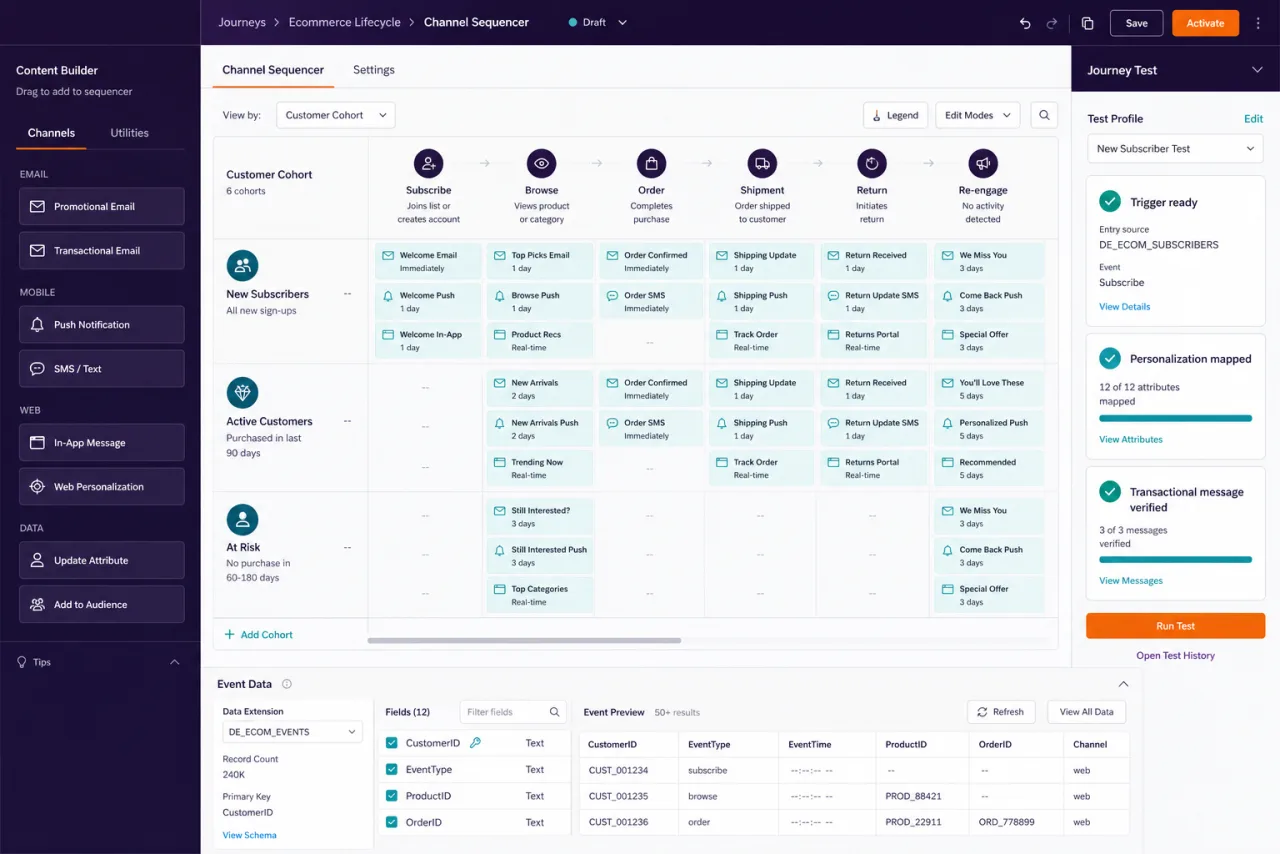
Audience Builder was customised to combine data from different sources and create a unified customer view.


Case study · eCommerce & Retail
An outdoor gear company connected its eCommerce platform to Salesforce Marketing Cloud to automate customer journeys, personalise email content and trigger transactional messages.
The situation
The outdoor gear company wanted to increase customer engagement, track customer information and automate marketing processes. It also needed a cost-effective approach that would integrate with its existing systems.
Product and transaction data were needed to support relevant marketing content and promotions. Customer subscriptions and sign-ups from different channels also needed to reach the marketing platform.
The client selected Salesforce Marketing Cloud. Shinetech developed integration services connecting it to the existing eCommerce platform, alongside customisation of the marketing functions.
The project questions
Audience Builder was customised to combine data from different sources and create a unified customer view.
Integration services supplied orders, shipments and returns through the Salesforce REST API and triggered transactional purchase emails.
Custom email-template functions and transaction-data extensions supported email creation and personalised content.
The solution
The Marketing Cloud work included an automation tool for customer journeys, Audience Builder customisation, email-template functions and data extensions for transaction information used in templates.
The integration services brought customer subscriptions into Marketing Cloud, transferred transactional data for orders, shipments and returns, and synchronised sign-up information from different channels.
Transactional email triggers supported the customer’s purchase process. These integrations supplied the data needed for marketing activity and promotions through the Salesforce REST API.
How we worked
Customise Audience Builder to combine information from different sources. Configure automated customer journeys, email-template functions and transaction-data extensions.
Connect subscriptions, channel sign-ups and order, shipment and return data through the Salesforce REST API. Trigger transactional messages associated with the purchase process.
The team gradually expanded to 10 people. Jira Kanban made work visible, while short daily standups supported updates and discussion of problems.
Code reviews supported quality and shared system knowledge. Retrospectives after each development sprint identified issues in the delivery process and opportunities for improvement.
Technology and delivery context
The result
The case report describes a connected, personalised shopping experience supported by relevant marketing messages.
The integration helped the client carry out marketing automation and send customised emails more efficiently, improving customer engagement.
The original report states that automation saved time and resources, allowing the company to focus on other business activities. It provides no quantified savings.
Planned next step
The source document records a plan to integrate Salesforce Data Cloud in a later phase. Proposed work included bringing together data sources, resolving different versions of customer records, audience segmentation and activation in Marketing Cloud.
This was described as a future phase. The document does not establish that the Data Cloud integration was completed.
Tell us about your customer information, commerce platform and marketing workflows.
Discuss Your Project