

Improved communication and real-time coordination across technical, sales, distribution, warehouse and production teams.
← Back to Case Studies
Case study · Logistics & Supply Chain
Connecting textile material flow across the supply chain
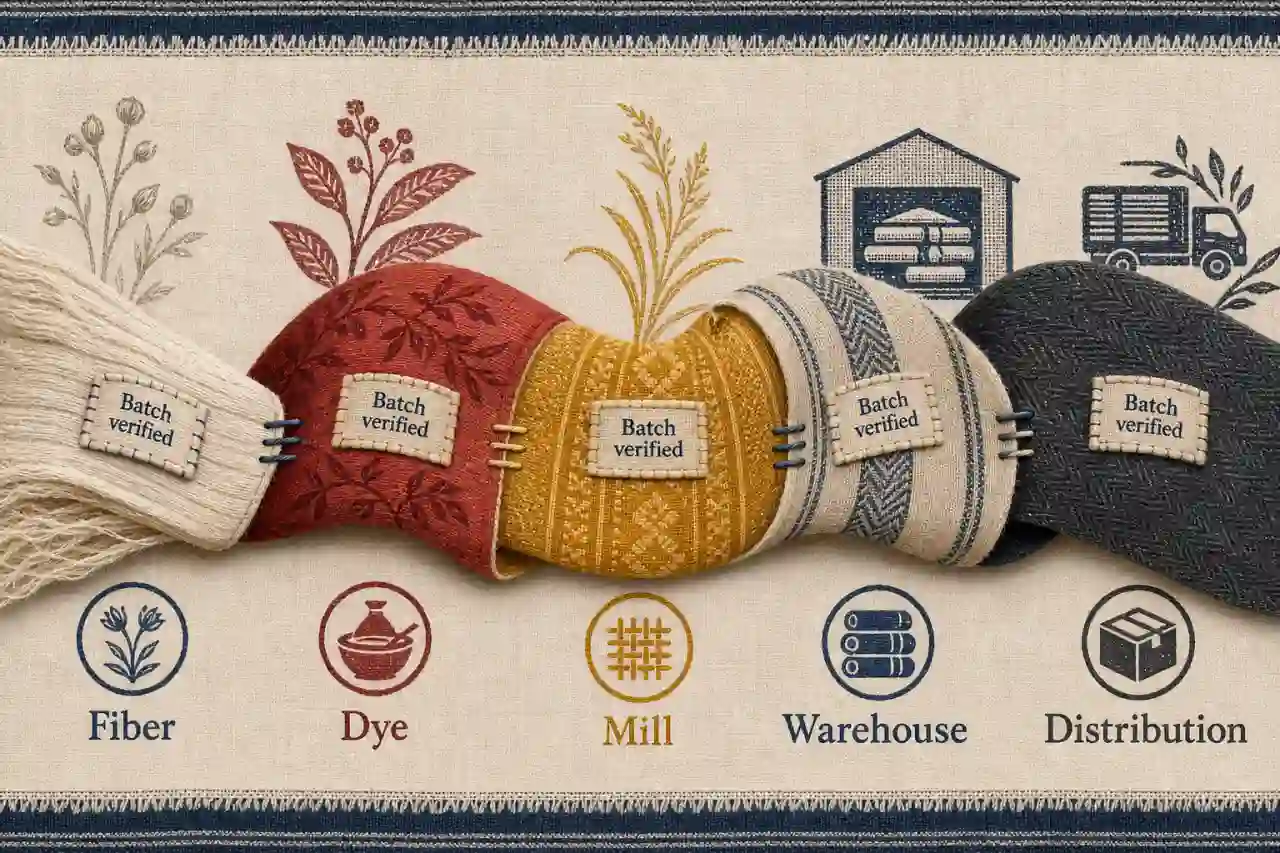
A growing Asian textile supplier needed to coordinate supply, manufacturing, warehousing, sales and distribution across internal departments and external companies. Separate systems and databases could no longer support timely material flow or operational control.
- Client context
- A large Asian textile supplier
- databases integrated
- Multiple
- material tracking
- Real time
- J2EE architecture
- 3-layer
The operating constraints
What the project needed to address
- Independent departmental databases had little connection, yet their existing structures could not be changed.
- The solution had to support a future migration from SQL Server to Oracle without disrupting business logic.
- Complex cross-department workflows, changing requirements and a tight schedule increased delivery risk.
Integration approach
Connect existing databases while preserving their structures
Built a three-layer J2EE supply-chain management system that integrated existing databases and enabled real-time tracking of raw materials, products, inventory and interdepartmental transactions.
The participating departments included technical, sales, distribution, warehousing and production functions. Several databases had to be integrated without changing their existing structures.
The team produced architecture, class, sequence and data-flow documentation. Struts supported routing, validation and presentation, while Hibernate connected the data layer to the independent databases.
Engineering approach
Separate presentation, business logic and data access
Worked from analysis through design, implementation and remote support, documenting architecture, classes, sequences and data flows.
Used Struts for routing, validation and presentation while separating business logic from the user interface.
Applied Hibernate to integrate independent databases without changing their underlying structures.
Added connection pooling, logging, PDF reporting and reusable table components for a maintainable operating platform.
The architecture also needed to accommodate a planned future move from SQL Server to Oracle; this was a requirement, not a completed migration recorded in the source.
Technology and delivery context
Tools and practices recorded for this engagement
JavaJ2EEStrutsHibernateSQL Server
The result
Recorded project outcomes
Delivered timely and accurate inventory reporting with better operational control.
Reduced maintenance costs while creating a flexible platform ready for future database migration.
Need support for a similar system or workflow?
Tell us about your existing platform, operating requirements and delivery priorities.
Discuss Your Project