← Back to Real Estate & Property Case Studies

Case study · Real Estate

Connecting Property, Lease, Receivables, Payables, and General-Ledger Work

A real estate operator needed one rule-aware accounting product for property structures, commercial leases, banking, journals, general ledger, receivables, payables, closing, and reports.

Real EstateProperty AccountingLease ManagementSQL Server
Connecting Property, Lease, Receivables, Payables, and General-Ledger Work
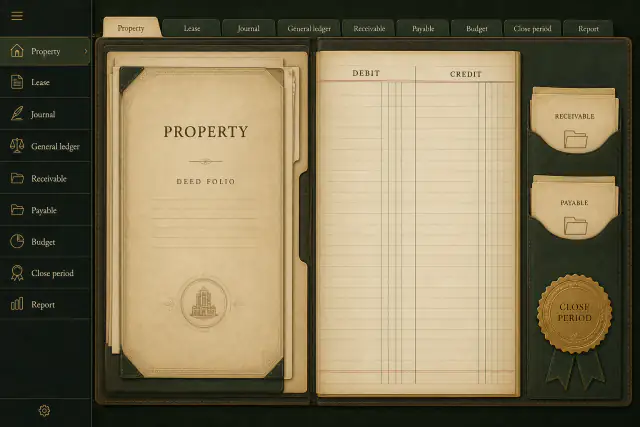
AI-generated or illustrative concept based on the case requirements. Actual client system not shown.
Industry
Real Estate
Delivery
Dedicated team
Focus
Business outcomes

The situation

Property information and accounting entries depended on each other, but each carried its own controls.

Properties were organized through legal entities, buildings, floors, units, tenants, leases, and bank accounts.

  • Financial work then extended through journals, the general ledger, budgets, accounting periods, receivables, payables, vendors, invoices, receipts, write-offs, checks, reports, and closing.

Recognise this situation?

Preserve accounting rules while keeping every transaction tied to the correct property context.

Connected entities

Properties, tenants, units, leases, banks, vendors, and documents shared references.

Accounting controls

Balanced debits and credits, unique documents, valid periods, and closing rules required consistent enforcement.

Scoped access

Users needed roles and property-level permissions rather than unrestricted access to every record.

The project approach

A layered .NET product linked property structure with general-ledger, receivable, and payable workflows.

The application combined shared data, validation, role controls, reports, and import and export functions across the accounting lifecycle.

Model entities, buildings, floors, units, tenants, commercial leases, and bank relationships.

How the solution was structured

Document the business rules deeply enough that accounting behavior could be implemented consistently.

  1. The source describes detailed field rules, relationships, validations, permissions, and process behavior across the product rather than only a screen list.
  2. A layered .NET design separated the user interfaces and services from data behavior, while SQL Server and reporting services supported persistence and output.
  3. Import, export, internationalization, and property-scoped role controls were treated as product capabilities alongside journals, receivables, payables, and closing.

Key information

Technology and delivery context

Industry
Real Estate
Services
Custom Development · Dedicated Teams
Technologies and practices
Lease management · General ledger · SQL Server · SSRS
Business impact
Operational clarity · Delivery continuity · Usable software

The result

Property, lease, banking, journal, receivable, payable, and general-ledger work became one rule-aware product.

  1. Relationships stayed explicit: Tenant, unit, lease, bank, vendor, and document records were connected instead of maintained as isolated lists.
  2. Accounting rules were built in: Balance, uniqueness, period, and document validations formed part of the documented behavior.
  3. Access followed responsibility: Roles and property assignments determined which information and actions a user could reach.

Need software that makes property context part of every financial workflow?

Connect real estate operations and accounting

Discuss Your Situation