← Back to Construction Case Studies

Case study · Construction

Connecting Field-Service Requests across Online and Offline Work

A construction-services organization needed field technicians to request help, receive assignments, and exchange answers with the back office even when a live connection was not available.

Field Service.NETOffline-firstSynchronization
Connecting Field-Service Requests across Online and Offline Work
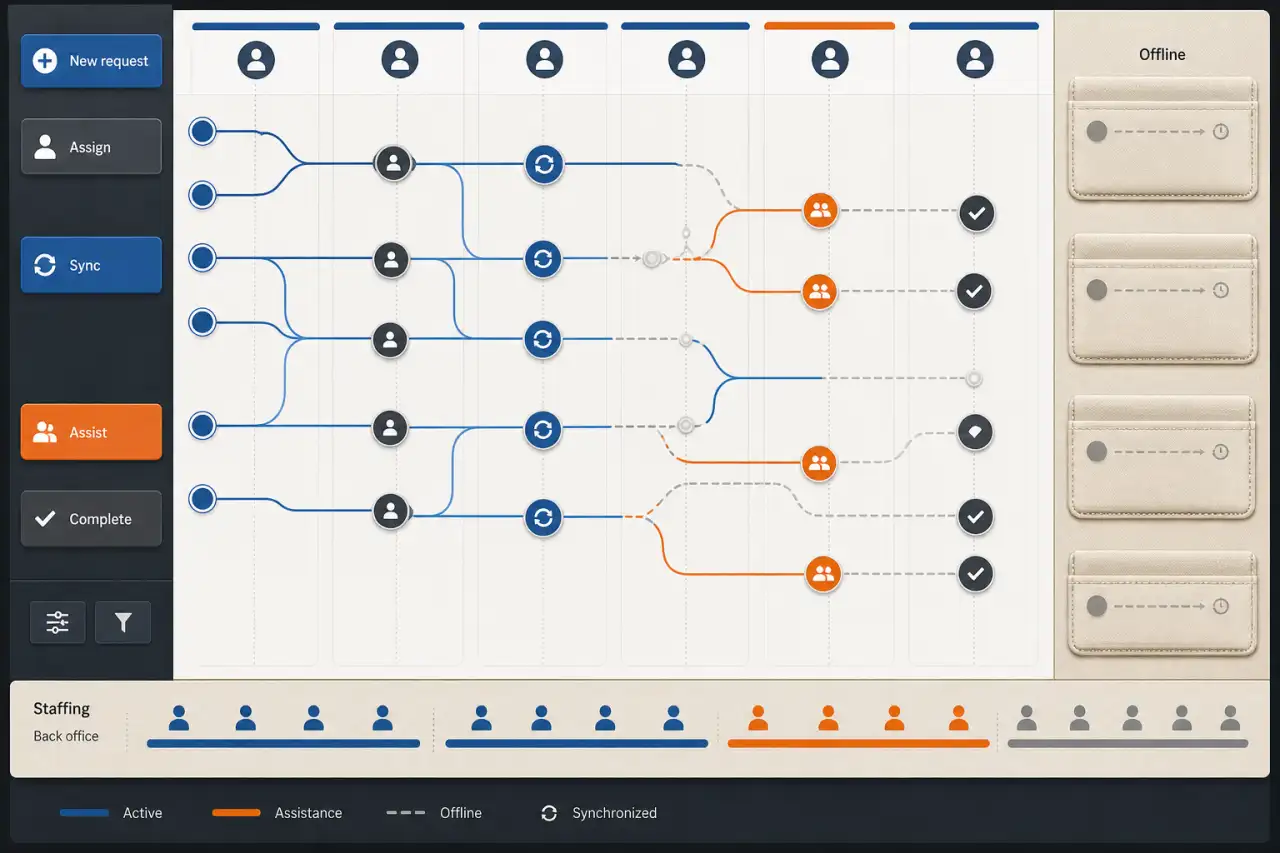
AI-generated or illustrative concept based on the case requirements. Actual client system not shown.
Industry
Construction
Delivery
Dedicated team
Focus
Business outcomes

The situation

Field technicians needed help without leaving the work site or depending on a continuous connection.

When technicians encountered a problem at a customer site, they needed to send a request to the back office. The request could then be assigned to another technician with the right availability or experience.

  • Back-office employees also needed to create requests and answers, maintain staffing information, and keep field devices synchronized with the server.

Recognise this situation?

Keep mobile and back-office work consistent across connected and disconnected conditions.

Field-originated requests

Technicians needed a simple way to ask for support while working at a customer site.

Dispatch and staffing

The back office needed to maintain staffing context and route requests to available help.

Intermittent connectivity

Technicians needed to continue working offline and synchronize later without losing updates.

The project approach

A three-part .NET application coordinated mobile field work, office administration, and server-side synchronization.

The system separated the technician experience, back-office controls, and shared server responsibilities while using web services to exchange data.

Let technicians create and receive requests, read answers, and continue essential work online or offline.

How the workflow operated

Design the request lifecycle around the realities of field connectivity.

  1. A technician could record a problem locally and send it when a connection became available.
  2. The back office reviewed the request, used staffing information to assign help, and returned answers or new work to the field.
  3. Bidirectional synchronization kept device and server data aligned, while notifications made new assignments visible to the selected technician.

Key information

Technology and delivery context

Industry
Construction
Services
Custom Development · Dedicated Teams
Technologies and practices
.NET · Web services · Offline-first · Dispatch
Business impact
Operational clarity · Delivery continuity · Usable software

The result

Technicians and dispatch staff gained one connected request-and-response workflow.

  1. Faster access to help: Technicians could request assistance without abandoning the job context.
  2. Clearer dispatch: Back-office staff could route questions and answers using current staffing information.
  3. Practical mobility: Offline operation made the workflow usable beyond consistently connected environments.

Need a field-service workflow that remains useful when connectivity does not?

Tell us what you are trying to achieve and we will help you find a practical way forward.

Discuss Your Situation