← Back to Agriculture & Farming Case Studies

Case study · Agriculture

Connecting Aquaculture Sensors, Water Quality, and Equipment Control

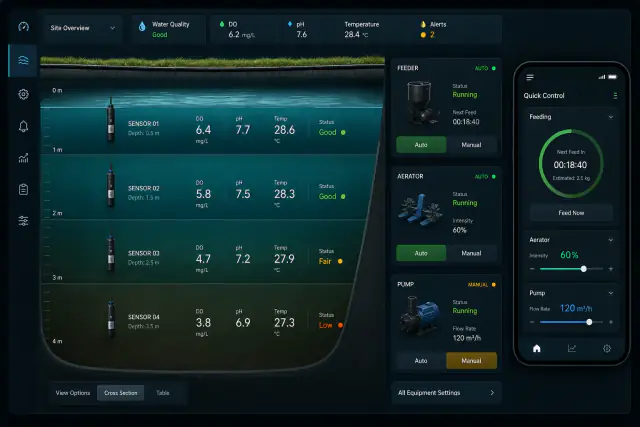
A system integrator and hardware partner needed software that could turn pond sensor data into mobile monitoring and direct control of feeding, aeration, and pumping equipment.

AquacultureIoTNode.jsHardware Integration
Connecting Aquaculture Sensors, Water Quality, and Equipment Control
AI-generated or illustrative concept based on the case requirements. Actual client system not shown.
Industry
Agriculture
Delivery
Dedicated team
Focus
Business outcomes

The situation

Aquaculture operators needed to see pond conditions and act on equipment without relying only on manual rounds.

The product had to receive water-quality information from connected sensors and present it in a form that operators could review remotely.

  • It also needed to connect that information with feeders, aerators, and pumps so users could adjust or automate equipment behavior from a mobile interface.

Recognise this situation?

Bridge physical equipment, unfamiliar domain rules, and a focused first release.

Domain learning

The engineering team needed to understand aquaculture operations and the devices used in the field.


Hardware integration

Sensor readings and equipment commands crossed software and physical interfaces.

MVP discipline

The first release had to focus on monitoring and control without absorbing every future product idea.

The project approach

The team built a focused IoT loop from sensing to mobile action.

Domain immersion and joint work with hardware specialists informed prototypes, priorities, and the integrated product design.

Work with domain and hardware specialists to map sensors, devices, and operator actions.

How delivery was run

Learn the pond, sensors, and equipment as one product system.

  1. The team combined software and hardware knowledge rather than treating device integration as a final connector.
  2. Prototypes gave stakeholders a concrete way to review controls and refine priorities before the full MVP was implemented.
  3. The documented release focused on water-quality monitoring and equipment operation; broader inventory, warning, patrol, market, and financial ideas remained outside the delivered claim.

Key information

Technology and delivery context

Industry
Agriculture
Services
Custom Development · Dedicated Teams
Technologies and practices
IoT · Node.js · PostgreSQL · Hardware integration
Business impact
Operational clarity · Delivery continuity · Usable software

The result

Operators could monitor water quality remotely and control key pond equipment through one connected product.

  1. Sensing connected to action: Water-quality information and equipment controls appeared within the same product context.
  2. Mobile operations enabled: Users could review conditions and adjust relevant equipment remotely.
  3. Future scope stayed separate: Planned inventory, warning, patrol, market, and financial functions were not presented as delivered outcomes.

Need software that links sensors, mobile users, and operating equipment?

Tell us what you are trying to achieve and we will help you find a practical way forward.

Discuss Your Situation