← Back to Case Studies

Case study · Telecommunications

Automating Voicemail Capture, Notification, and Mailbox Administration

A call-handling provider needed to replace manual message operations with a voicemail platform that could answer calls, store recordings, notify users, and provide personal and administrative web access.

TelecommunicationsVoicemailJavaTelephony Integration
Automating Voicemail Capture, Notification, and Mailbox Administration
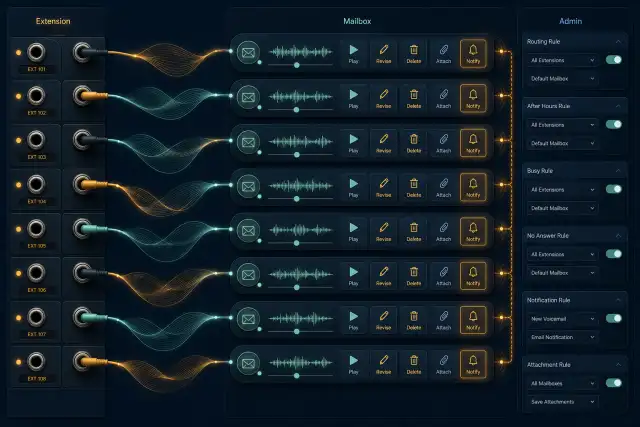
AI-generated or illustrative concept based on the case requirements. Actual client system not shown.
Industry
Telecommunications
Delivery
Dedicated team
Focus
Business outcomes

The situation

Manual message handling could not provide dependable around-the-clock support as call volume grew.

The provider wanted a voicemail application integrated with call management. Each extension needed its own mailbox and prerecorded answer, while incoming messages had to become stored voice records available to the right user.

  • Mailbox owners also needed to review and manage messages from the web, receive email notifications, and access playback when an IP phone was not available.

Recognise this situation?

Connect telephony events, voice media, personal access, and administration in one reliable product.

Call-to-mailbox routing

Each extension needed a corresponding mailbox and defined behavior when the owner did not answer.


Voice message control

Users needed playback and practical message actions without depending on the original phone.

Personal and admin access

Mailbox owners and administrators required different browser-based controls.

The project approach

A Java platform turned incoming calls into managed voice records and user notifications.

The team translated business requirements into a technical specification and built the product incrementally around telephony, media, mailbox, and web components.

Route unanswered calls to the matching mailbox, play the recorded greeting, and store the voice message on the server.

How the solution was structured

Resolve the call and media lifecycle before expanding the interface.

  1. Requirements discussions established how unanswered calls, greetings, mailboxes, recordings, and notifications should interact.
  2. Logical design and technical specifications separated telephony integration from media handling, web access, and persistent data.
  3. Incremental development made it possible to validate the core message path before layering on broader mailbox and administrative functions.

Key information

Technology and delivery context

Industry
Telecommunications
Services
Custom Development · Dedicated Teams
Technologies and practices
Java · JTAPI · PostgreSQL · Telephony
Business impact
Operational clarity · Delivery continuity · Usable software

The result

The provider gained a flexible voicemail workflow that reduced dependence on manual message handling.

  1. More dependable coverage: Calls could be answered and recorded even when the extension owner was unavailable.
  2. Faster awareness: Email notifications alerted mailbox owners when new messages arrived.
  3. Practical control: Users and administrators could manage the system through browser-based interfaces.

Need to modernize a voice or message workflow across users and administrators?

Tell us what you are trying to achieve and we will help you find a practical way forward.

Discuss Your Situation