← Back to Case Studies

Case study · Business Software

Adapting a Cross-Platform Information Product to Changing Requirements

A distributed team replaced phase-end delivery with shorter increments, demonstrations, and visible change decisions when requirements repeatedly shifted.

Business SoftwareRequirements ChangeAgileVB.NET
Adapting a Cross-Platform Information Product to Changing Requirements
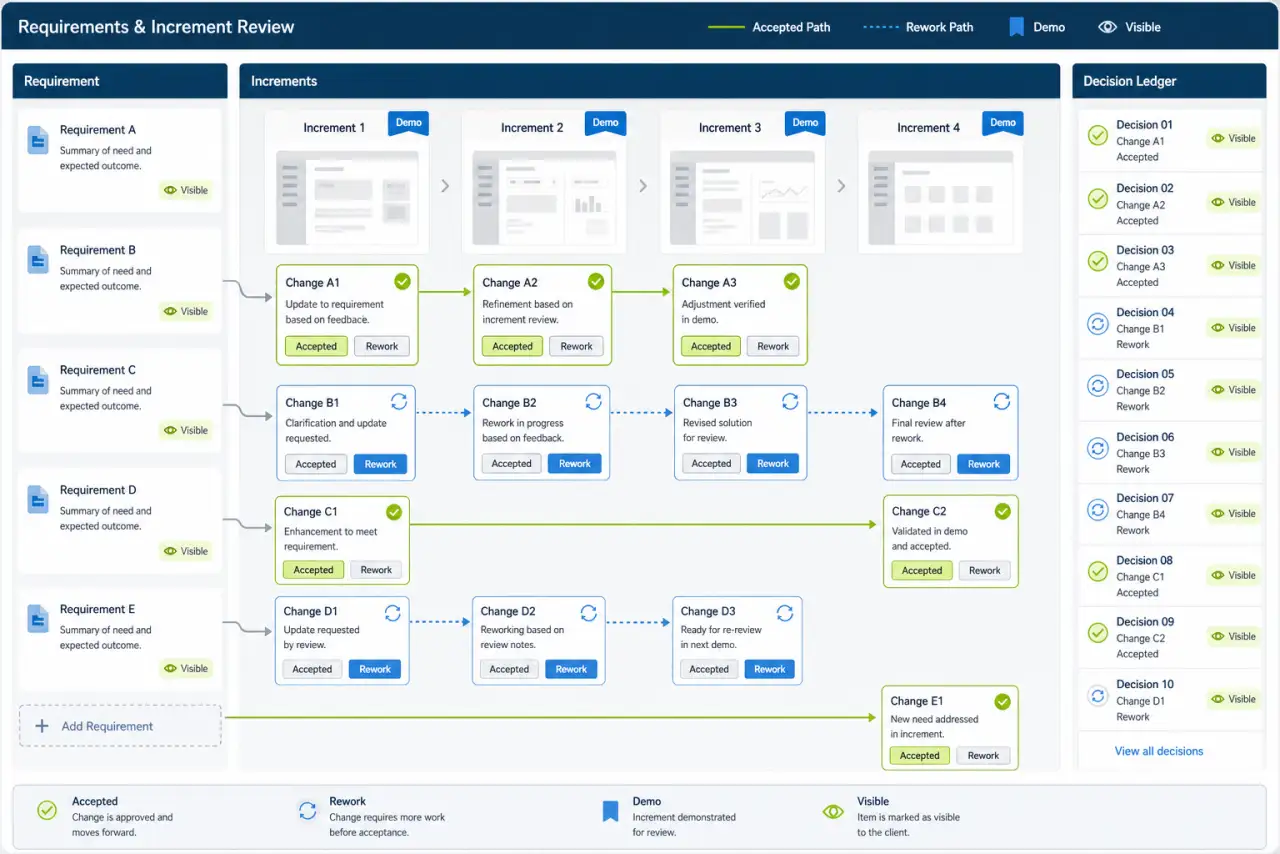
AI-generated or illustrative concept based on the case requirements. Actual client system not shown.
Industry
Business Software
Delivery
Dedicated team
Focus
Business outcomes

The situation

Major requirement changes repeatedly invalidated work completed under a phase-based plan.

The product was initially organized around a waterfall model with delivery at the end of a development phase.

  • As requirements changed, the team needed a way to expose work earlier and make adjustments before another large phase was complete.

Recognise this situation?

Make changing requirements reviewable before they created another large cycle of rework.

Late feedback

Phase-end delivery delayed the point at which changed expectations became visible.

Large changes

New requirements could affect work completed in an earlier phase.

Distributed work

Several teams needed shared visibility into current decisions and increments.

The project approach

Shorter Agile increments brought demonstrations and requirement decisions closer together.

The team shifted from a phase-end handoff to frequent delivery, review, and communication.

Break the work into smaller increments that could be demonstrated earlier.

How the work unfolded

Use each demonstration as a decision point for the next increment.

  1. The original waterfall plan was replaced with recurring increments and product demonstrations.
  2. Feedback and changed requirements were incorporated into the next reviewable unit of work.
  3. Shared visibility helped the distributed participants follow what had been accepted and what required revision.

Key information

Technology and delivery context

Industry
Business Software
Services
Custom Development · Dedicated Teams
Technologies and practices
Agile · Requirements change · VB.NET · DB2
Business impact
Operational clarity · Delivery continuity · Usable software

The result

The product work moved from phase-end delivery to a shorter, visible cycle of review and adaptation.

  1. Feedback arrived earlier: Demonstrations created checkpoints before another large phase was complete.
  2. Requirements stayed active: Changed expectations could shape the next increment of work.
  3. Evidence remained bounded: No undocumented personal-information features or commercial results were added.

Need a delivery model that can adapt without losing visibility?

Tell us what you are trying to achieve and we will help you find a practical way forward.

Discuss Your Situation